- Home
- About Us
- Products
- Knowledge
- Service
- Resource
- News
- Contact Us
Leave Your Message
In today's climate, with the best standards of hygiene and sanitation, supply chains for chemical processing go to extremes in maintaining proper hygiene conditions, especially with pharmaceuticals, food and beverages, and biotechnology. Innovative equipment like the Sanitary Vent Valve, though sometimes unnoticed, assist in maintaining the integrity of the product by preventing contamination within the processing areas and during storage. The sanitary valves market globally is expected to constitute USD 15.48 billion in 2027, as quoted by Grand View Research, driven by the rising demand for sanitary equipment in the manufacture of processes with high hygiene standards. Therefore, advanced technologies and components like the Sanitary Vent Valve must be taken into consideration by companies with aspirations to optimize their operations and, at the same time, fulfill standing regulations.
Wenzhou Lifei Stainless Steel Company cement understands hygiene's paramount importance within supply chains. With over 15 years in fluid equipment manufacturing and 13 years in export trade, we have remained customer-oriented, emphasizing customer needs and satisfaction. Our commitment to the efficient development of sanitary solutions to meet the industry's highest standards. Integrating Sanitary Vent Valves into your processes not only provides enhanced hygiene but overall efficiency and safety in your supply chain so that you and your operations will flourish in a competitive marketplace.

The impact of COVID-19 on the supply chains was harsh and unnoteworthy; the repercussion was mainly hygiene practices as a concern to public health. Indeed, the need for serious control over hygiene being maintained in supply chains has exploded because countries around the world note that the time is due for health systems to go beyond the thresholds of capacity and services. These hygiene attentions must also be ensured not just accessed to safeguard the vulnerable, such as pregnant women and newborns, but also for making things easier in operations across industries leveraging much on such supply networks. Sanitary vent valves are new products that have gained importance as a key and innovative means of improving hygiene processes in the supply chain. These valves are critical in preventing contamination when transporting or Managing goods, especially with reference to the sectors such as pharmaceuticals and food, which concern a lot with cleanliness. By applying advanced sanitary technology, any enterprise may have guaranteed protection for its products while also convincing the consumers that they understand commitment involving standards of health and safety. Call for global actions that improve hygiene practices in supply chains has become that clear as we move into a world post-pandemic. There is a loud cry from the leaders of the world for complete strategies-involving water, sanitation, and hygiene-all elements necessary to keep the entire community healthy. It could be a strong case toward the future of global supply chains and public health resilience to emphasize these hygiene innovations.

Sanitary vent valves play a vital role in cleanliness and efficient operations in the industries such as food and beverage, pharmaceuticals, and biotechnology. These valves are intended to let gases and vapors escape while preventing contaminants. Products remain uncontaminated from transportation processes to storage. By letting air out in ways that don't admit pathogens or foreign bodies, sanitary vent valves maintain very tight safety throughout the production cycle.
These sanitary vent valves are functionally tailored to minimize pressure differentials and facilitate smooth airflow. Specialized materials with corrosion resistance and high-temperature endurance are often used to make them suitable for rigorous environments. Self-cleaning technology, automated control, and any combination of these can enhance safety and operational efficiency for these valves. So, manufacturers can have their processes running with less downtime and without sacrificing product consistency.
In the context of the global supply chain, installing sanitary vent valves will be a further step toward hygiene management. As products cross borders, hygienic condition maintenance becomes very important to keep people safe as well as to comply with international requirements. By installing very latest sanitary valves, a company can turn its improvement regarding hygiene practices into something from earlier-day supply chain steps all the way through to the consumer.
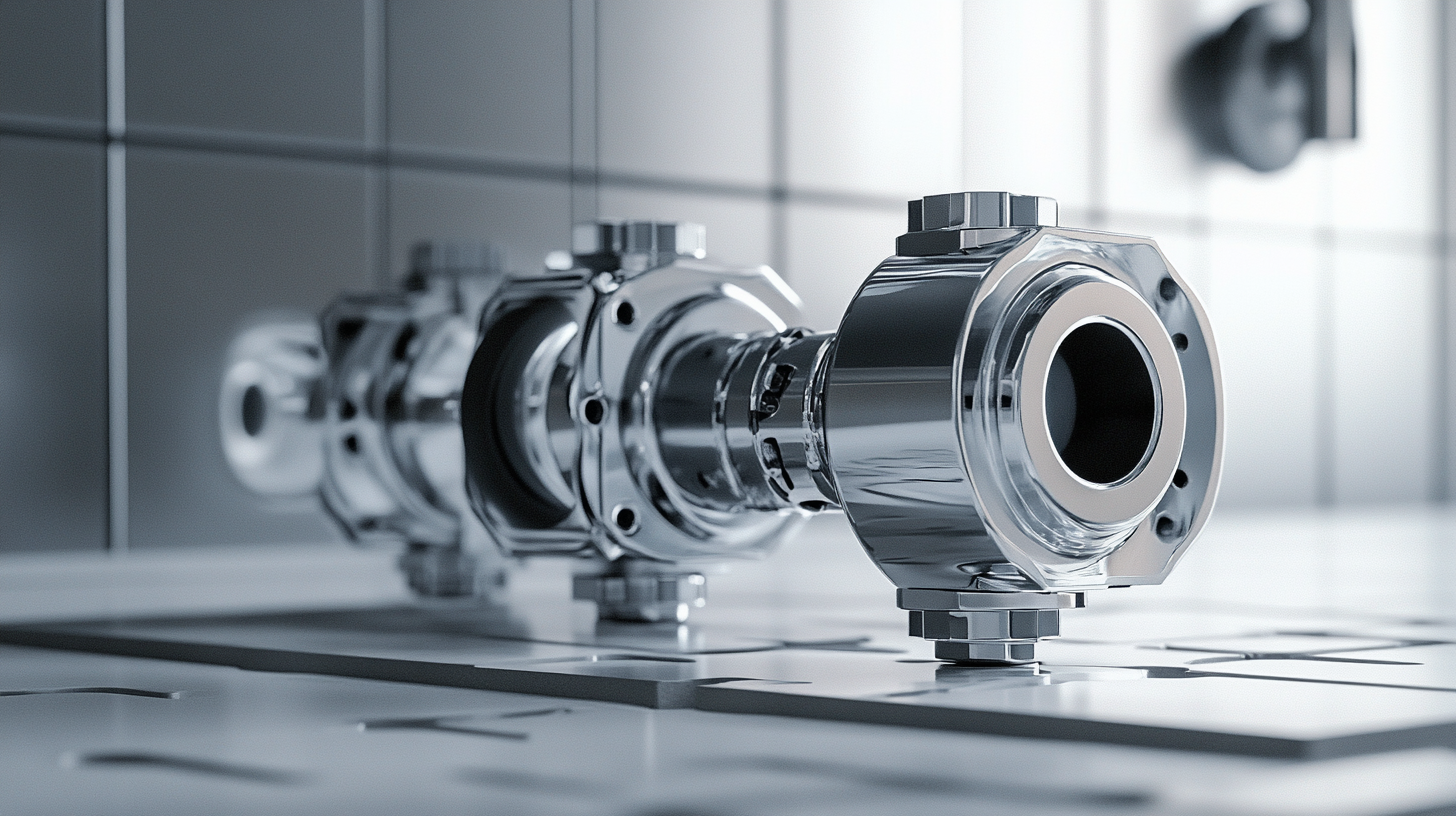
Safe and clean supply chains today reply to the demands of industries such as the food and beverage, pharmaceuticals, and biotechnology. Innovative technologies have been making headway in the manufacture and development of sanitary vent valves, which are critical devices in keeping clean product manufacture processes from contaminating transportation processes. According to a latest report by MarketsandMarkets, the global sanitary valves market will see a 5.6% CAGR grow and reach about 6.8 billion dollars by 2025. Such instances are demonstration proof of the emerging demand for more effective hygiene solutions in supply chains.
New materials developed with new engineering techniques have been incorporated into the newer, more efficient sanitary vent valves with increased resistance to bacteria, thus facilitating easier cleaning. For example, the use of high-grade stainless steel and specialized coatings significantly minimizes the risk of biofilm formation. Hence, higher hygiene standards are ensured. Smart technology has features that contribute to real-time monitoring of pressure and flow rates, leading to proactive maintenance and less downtime, which is important in the integrity of production lines.
Research from the International Society for Pharmaceutical Engineering points that 80% of contamination incidents in pharmaceutical manufacturing are caused by poor control of external environment factors. With the state-of-the-art sanitary vent valves, the risk of exposure to distinct areas of production can be reduced as contaminants are restricted before reaching sensitive production areas. With increased regulatory pressure, the innovative sanitary vent valves can only be expected to grow in importance as an innovative measure for public health protection and quality assurance in products in global supply chains.

Improving hygiene processes in global supply chains is essential for risk reduction and product safety. Since tighter regulations and growing consumer interest in health and cleanliness have emerged, businesses are now forced to adopt innovative solutions such as the sanitary vent valve. The sanitary vent valve is the unsung hero in ensuring a sterile atmosphere during transport to avoid contamination in various industries, especially food and pharmaceutical.
According to a report prepared by Global Hygiene Products Market, the sanitary valve segment of the market is expected to increase at a CAGR of 5.2% during the forecast period ending in 2027, indicative of a notable transition to hygiene-centric ways of working. On the other hand, advanced sanitary vent valves address cleanliness, reducing the risk of product recall and enhancing brand image. They also enable companies to minimize exposure to contamination and liability while complying with increasingly stringent regulations that derive consumer confidence.
FSIS statistics state that foodborne illnesses affect approximately 48 million people annually in the U.S., underlining the dire need for sanitation improvement. Supply chains further their hygiene protocols for the greater public health when they install sanitary vent valves. In the long run, the case is strong for the return on investment for hygiene innovation because they simply make operations faster and more efficient.
Modern sanitary vent valves have transformed hygiene processes across global supply chains; they prove indispensable in sanitation contamination control. Case studies continue to highlight successful applications of these valves from food and beverage to pharmaceutical industries. A report from the Hygiene and Sanitation Research Institute (HSRI) claims that 80 percent of contamination cases in the food industry are related to unproper air management during production. Sanitary vent valves mitigate such risks through proper airflow assurance yet safeguard from external contaminants through the closed systems.
One of many case studies involves major incidents of contamination that have been reported in a dairy production industry due to poor ventilation systems. Thus, upon placing the advanced sanitary vent valves, the manufacturer reported a 60-percent drop in hours lost to contamination in just half a year. Such valves not only improve hygiene but also enhance production efficiency, thereby making the case for direct association of vent valve implementation with operational success. According to predictions from industry analysts, businesses installing these technologies will see operational efficiencies rising by up to 15% within three years at a time when cleanliness becomes an increasingly significant determinant for maintaining product integrity.
This case underscores the importance of sanitary vent valves in a pharmaceutical company that must meet extensive regulatory standards. After introduction of a custom vent valve system, a leading drug company successfully dropped its contamination-related product recalls by 40 percent. According to Global Pharmaceutical Hygiene Alliance reports, high hygiene standards can save millions to companies by preventing product recalls and building consumer trust. As these case studies show, the adoption of innovative sanitary vent valves is more than just trendy; it's the foundation of stronger and safer, globally integrated supply chains.
Integrating innovative sanitary technologies, such as advanced sanitary vent valves, greatly challenges global supply chains set to improve on hygiene processes. Resistance to change in established systems seems to be among the first hurdles. Many companies have relied on traditional means for years, and extending the thought process towards adopting new technologies can often find skepticism. Employees accustomed to older ways of working may be reluctant to embrace new workflows for the fear of hassle in their established routines.
Besides, the costs running with such transitions to new sanitary technologies may frighten many. Greater involvement of finances with new equipment, training, and downtime during the phase of implementation raises a few eyebrows in the place. Expenses could be perceived as really huge by smaller companies, imparting thereby a feeling of divide between those who could and the ones who could not.
The whole issue gets complicated by regulations. Sanitary practices differ in standards between regions, and to bring new technologies into compliance with these standards gets quite complicated. The need to ensure that their new system meets the internal objective and the compliance of external requirements can become a somewhat tedious and resource-consuming endeavor. This oftentimes slows down adoption and may lead to missing an opportunity for efficiency and hygiene improvement.
This is undergoing change with greater globalization in the supply chains because of health and safety awareness that comes with it. Industries, especially those for whom hygiene is critical, such as food production, pharmaceuticals, and health care, have now realized that much needs to be improved in their hygiene processes. This move has made new innovations, such as sanitary vent valves, unavoidable in terms of compliance and product integrity across the supply chain.
Future trends will show that there will be increasing demands for the recently developed sanitary vent valves, which are claimed to provide supplemental hygiene and efficiency benefits. Removal of the common appeal issues, such as contamination, pressure changes, and spoilage, can be obtained from such valves. With smart technologies, including IoT integration, these valves can introduce real-time monitoring and automated controls, thus enabling instant reaction to possible hygiene breaching. Sustainability considerations are further pushing manufacturers on eco-friendly materials and designs, thus strengthening the role of vent valve innovations in modern hygiene practices.
As industry prepares itself for tougher hygiene regulations, so the focus of venting valve technology is likely also to extend. Investments in very strong systems will be and have continued to be put up to match evolving standards and be able to protect the products from contamination while at the same time fulfilling their social responsibilities towards public health. Aligning with these trends will thus be an important measure toward being competitive in a very dynamic marketplace, where hygiene is paramount and innovativeness opens doors to success.
The role of compliance in global supply chains cannot be downplayed in other for companies to ensure the enforcement of hygiene practices across different markets. The World Health Organization states that up to 70% of foodborne diseases warrant a lack of hygiene in supply chains, and thus, compliance ought to be on the list of earliest measures to take in tackling risks. These valves specifically serve these purposes to maintain compliance in hygiene standards across the entire supply chain, especially for great manufacturers in Asia as more and more importance is given to regulatory checks in safety.
Recent findings from the Asian Development Bank shows that almost 60% of companies have shifted attention to enhancing their supply chain hygiene processes in the wake of the pandemic since the hype is all over the place. Firms have begun to occasionally embrace new technologies along with putting their regimes in line with international hygiene standards so as to avert severe fines and retain their market presence. The design of these sanitary vent valves will aid in the maintenance of a much leaner hygienic process and ensure contaminents are effectively filtered while allowing for appropriate ventilation of an area at these facilities.
A number of policy approaches include the merging of them with compliance management. In fact, a study led by the McKinsey & Company reveals that more than 40% of hygiene-related incidents can be eliminated if an organization operates a broad-based compliance framework. Thus it goes to show the significance of hygiene compliance regarding the protection of health and the duty of care to other stakeholders and end-customers alike. It is this synergy between new technologies and strict adherence to compliance where Asian businesses are required to tread for vibrant health and safety across the board.
The food and beverage, pharmaceuticals, and biotechnology industries are most impacted as hygiene is critical in these sectors.
The global sanitary valves market is projected to reach $6.8 billion by 2025, growing at a CAGR of 5.6%.
Advancements such as high-grade stainless steel and specialized coatings enhance bacteria resistance and facilitate easier cleaning, reducing biofilm formation.
Research indicates that 80% of contamination incidents are attributed to inadequate control of external environment factors.
Modern sanitary vent valves often include smart technology for real-time monitoring of pressure and flow rates, which aids in proactive maintenance.
They help industries maintain effective hygiene processes, ensure product integrity, and meet stricter regulatory requirements.
Trends include a growing demand for advanced designs that enhance hygiene, improve operational efficiency, and incorporate smart technologies with IoT integration.
Manufacturers are focusing on creating eco-friendly materials and designs as part of their vent valve innovations.
Investing in robust systems is vital for aligning with evolving hygiene standards and protecting products, thus fulfilling corporate responsibility to public health.
Smart technologies allow for real-time monitoring and automated controls, enabling immediate responses to potential hygiene breaches, thereby improving overall safety.