- Home
- About Us
- Products
- Knowledge
- Service
- Resource
- News
- Contact Us
Leave Your Message
Hey, you know, with the global demand for fluid control systems really picking up, the ball valves market is projected to grow quite a bit. And, interestingly enough, this is something folks are pretty excited about ahead of the upcoming 138th China Import and Export Fair in 2025. Just recently, MarketsandMarkets released a report saying that the ball valves industry might hit about USD 10.5 billion by 2026, with a solid annual growth rate of around 5.5% from 2021 through 2026. Wenzhou Lifei Stainless Steel Co., Ltd. has been right there at the forefront for over 15 years, manufacturing fluid equipment, and they've got 13 years of export experience under their belt. They're really dedicated to understanding what their customers need—so you can expect not just high-quality ball valves, but also a company that genuinely cares about helping clients succeed and stay satisfied as the market keeps evolving. And let's not forget—this 138th China Import and Export Fair is a great spot for industry folks to show off their latest innovations and build those important partnerships, which really helps push the whole ball valve industry forward in terms of growth and tech advancements.

Looking ahead to 2025, the ball valves market is expected to see pretty solid growth, mostly thanks to some key trends and drivers that were really highlighted at the 138th China Import and Export Fair. People are more and more looking for reliable, efficient ways to control flow, especially in industries like oil and gas, water treatment, and chemicals. As companies aim to run smoother operations and cut down on leaks, you'll probably see a lot more adoption of ball valves.
On top of that, the global market for semiconductor valves is on a serious upswing — estimates suggest it’ll jump from around $2.59 billion in 2024 to over $5.5 billion by 2033, growing at roughly 8.86% each year. This boom is mainly driven by rapid tech advancements and more investment in semiconductor manufacturing. Meanwhile, the pipeline valve market isn’t falling behind either; it’s projected to grow from about $2.045 billion in 2022 to roughly $3 billion by 2030, which is about a 5.1% compound annual growth rate from 2024 onward. All these trends just show how the valve world is constantly evolving, with plenty of opportunities popping up—especially as industries demand better performance and stricter compliance with regulations.
| Region | Market Size (USD Million) | Growth Rate (%) | Key Trends | Growth Drivers |
|---|---|---|---|---|
| North America | 450 | 5.8 | Automation Integration | Oil and Gas Exploration |
| Europe | 380 | 4.5 | Sustainability Initiatives | Energy Efficiency Regulations |
| Asia-Pacific | 600 | 7.2 | Rapid Urbanization | Manufacturing Sector Growth |
| Latin America | 220 | 3.7 | Infrastructure Development | Investment in Utilities |
| Middle East & Africa | 300 | 4.1 | Technological Advancements | Oil & Gas Investments |
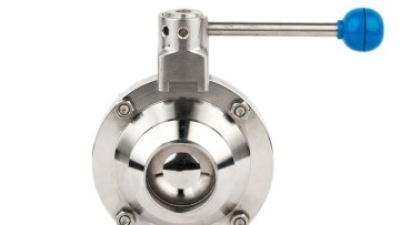
The QF7 series butterfly-type ball valves represent a significant advancement in sanitary valve technology, particularly in the food and beverage, pharmaceutical, and chemical industries. These valves are specifically engineered for quick installation and effortless cleaning, which is a critical requirement in sectors where hygiene is paramount. According to the 2021 Global Sanitary Valves Market Report, the demand for sanitary valves is expected to grow at a CAGR of 6.2% over the next five years, emphasizing the increasing importance of clean and efficient valve solutions in sensitive applications.
The SS304 and SS316L stainless steel materials used in the QF7 series provide exceptional corrosion resistance and durability, ensuring that these valves can withstand harsh operational conditions while maintaining compliance with stringent industry standards. A study by the American Society of Mechanical Engineers (ASME) reported that materials like SS316L outperform standard stainless steels in maintaining integrity under various stressors, which is particularly advantageous when handling viscous or granular media.
Beyond their material properties, the design of the QF7 butterfly valves facilitates smooth flow and minimizes turbulence, which is crucial for maintaining product quality in processing environments. With the increasing emphasis on operational efficiency and cleanliness within manufacturing settings, the QF7 series stands out as a practical choice, aligning perfectly with industry needs for reliability and sanitation.
: The ball valves market is projected to experience significant growth in 2025, driven by increasing demand for efficient flow control systems in various industries.
The demand for ball valves is primarily driven by industries such as oil and gas, water treatment, and chemical processing.
The global semiconductor valve market is expected to grow from approximately $2.59 billion in 2024 to $5.56 billion by 2033, with a compound annual growth rate (CAGR) of around 8.86%.
Technological advancements, such as automation and IoT, are enhancing the functionality and performance of ball valves, making them increasingly essential in modern industrial applications.
North America is projected to be a lucrative market for residential ball valve sales, expected to rise from USD 378.2 million in 2025 to USD 652.2 million by 2035.
The butterfly valve segment in Europe is expected to witness a CAGR of 4.15% from 2025 to 2033.
The increased focus on sustainability and energy efficiency in industries is anticipated to bolster the demand for high-quality valve solutions.
Advanced manufacturing techniques and smart design are becoming increasingly vital for the development of durable and reliable ball valves in critical infrastructure.
The pipeline valve market is projected to grow from $2.045 billion in 2022 to $3.012 billion by 2030, reflecting a CAGR of 5.1% from 2024 to 2030.
Manufacturers have opportunities to expand their presence in key markets, driven by rising demand for efficient fluid control solutions and advancements in technology.
So, there's this article called "Ball Valves Market Growth Insights at the 138th China Import and Export Fair 2025"—I think it does a pretty good job of breaking down what's happening in the ball valves world. It gives a solid overview of the key trends and what’s driving growth as we head into 2025. They talk about the expected market size and how revenue might grow, especially around the time of the upcoming Fair. Plus, they highlight how new tech developments are really pushing the industry forward.
They also dive into regional differences, pointing out which markets are hot and where new opportunities could pop up. The piece gives some good insights into who the major players are in this space, so you get a sense of the competitive landscape. Oh, and they touch on sustainability efforts, which seem to be really sparking some cool innovations in ball valves. Companies like Wenzhou Lifei Stainless Steel Co., Ltd., which has been around for over 15 years in fluid equipment manufacturing, are putting a big emphasis on meeting customer needs while also focusing on eco-friendly practices. Overall, it feels like a pretty thorough and engaging look into where things are headed for this industry.