- Home
- About Us
- Products
- Knowledge
- Service
- Resource
- News
- Contact Us
Leave Your Message
There will be emerging breakthroughs in Ball Valve Shut Off in the technology for fluid control in the year 2025. Industries realize the fact that they are becoming increasingly globalized every day, thus the need for improved efficiency and reliability. Therefore, understanding the best practices around these changes becomes critical for buyers looking to enhance their operational efficiency. This blog will shed light on the future-most revolutionizing developments about which innovations are going to be dated to change the scene for the Ball Valve Shut Off market in its entirety and bring full precious pearls of knowledge to global buyers looking to keep pace in their respective domains.
At Wenzhou Lifei Stainless Steel Co., Ltd., we hold our extensive experience and dedication to customer satisfaction. We have over 15 years of rich experience in the fluid equipment manufacturing and 13 years in the export trade; therefore, our clients are the primary focus in any of our operations. Our commitment to quality and innovation goes hand in hand with the trends coming in the future of Ball Valve Shut Off technologies. The objective of this blog is to impart vital knowledge that will fulfill industry needs by empowering buyers to make the right choice for their success.
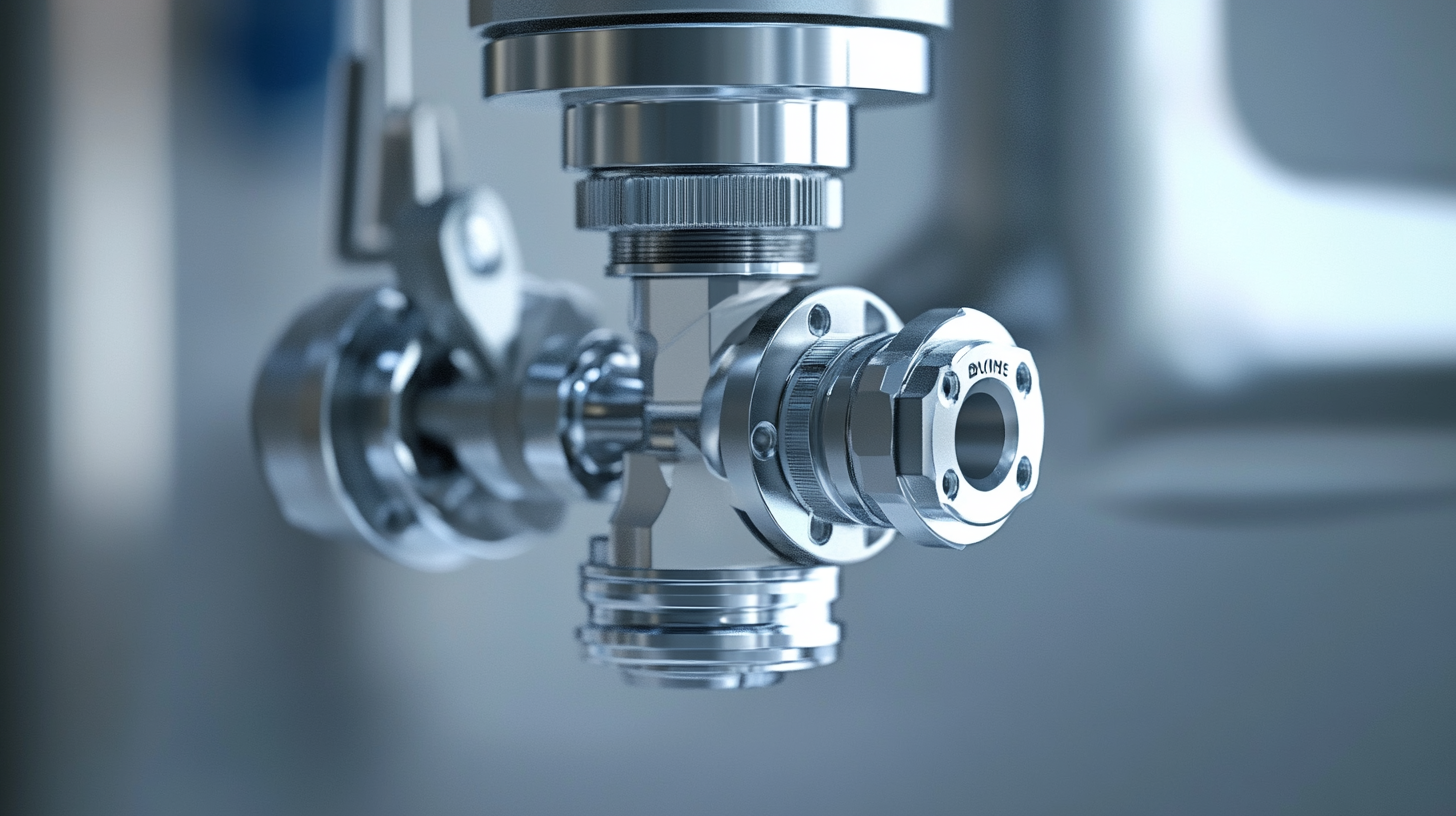
Ball valve shut-off technology will take a leap into the future by 2025, driven by the manifold demands for efficiency and reliability in fluid control systems. Engineering material changes in ball valves is a significant factor to this advancement. Contemporary ball valves are more often being created with high-performance polymers and composite materials that demonstrate higher resistance to corrosion and wear. This would ensure longer operational life, lesser downtime, and reduced maintenance costs associated with the given ball valve. These polymers and composites also tightly seal and operate in extreme conditions, thereby greatly enhancing the performance of valve systems. At the same time, smart technologies incorporated into ball valve designs are changing the way operators control fluid systems. Most of the advanced features include IoT connectivity, predictive maintenance sensors, and automated shut-off capabilities. The smart ball valves interact with the centralized monitoring systems to facilitate real-time data collection and analysis. Operators now get notified of performance issues before they escalate into system failure, thus ensuring seamless operations and shortening downtime. Such a technological transition ensures not only high performance but also safety in critical applications. As global buyers seek to maintain a competitive edge in their industries, insight into the changes that come with ball valve shut-off technology will be relevant. Such new technology affords improved operational efficiency and cost-effectiveness. Considering recent developments, manufacturers who are aggressive in R&D in this area would allow buyers to create solutions that take into consideration specific operational needs and challenges in 2025 and beyond.

This development in the ball valve domain states a sudden change in shut-off mechanism technology influencing the global marketplace for better operational efficiency and safety. Innovations are setting high performance onerous on industries; CLCC is a new name pointed to create several improvements in valve functions. The unique concept of controlled shut-off and active commutation in thyristor valves presented by the CLCC directly addresses several concerns for multi-input DC systems by minimizing commutation failure occurrences.
The advantages of such innovations are more than one. Players enhancing shut-off methods significantly increase system reliability-critical attributes for oil and gas, water management, and power generation. An example of how much the shutdown mechanism methods could impact market growth is seen in a MarketsandMarkets report forecasting that by 2027, the global market for ball valves will reach USD 15.66 billion. Innovations such as CLCC not only cut the risks but also enhance equipment life, thus reducing the overall maintenance cost and augmenting the system performance.
Furthermore, the applications of advanced shut-off technologies support compliance with varying regulatory standards that become all-important for clientele across industries. We realize that these innovations, because of their excellent abilities to enhance operational efficiency and add value in the terms of productivity, mean a huge evolutionary step toward achieving global sustainability. Going forward, as industries adopt these new technologies, it is critical for realizing best outcomes that the right suppliers should be identified, emphasizing innovation and reliability.

There is a comparison between a traditional ball valve and a modern one in the field of industrial valve technology, and here's how it advances according to modern demands. Traditional ball valves are mostly used for ease because they are popularly known to deliver flow control by having a functional spherical disc, operating under a common mechanism. According to a report from the Valve Manufacturers Association of America (VMA), traditional systems indulge problems of efficiency to their operational lifetime due to wear and tear, which is most active in high-pressure applications. The failure rates in legacy systems, according to VMA, are estimated to be around 12% a year.
In sharp contrast, modern ball valve designs have stainless steel and other high-tech materials in their construction. Integration of smart technologies such as real-time monitoring control and diagnostics provided through IoT connectivity in modern valve systems should increase operational efficiency significantly. It has been reported in a study published by the Journal of Cleaner Production that modern ball valves can reduce leakage rates by to a maximum of 70% with respect to traditional ones, thus decreasing environmental discharges and improving energy use. Additionally, durable materials such as fluoropolymers and steel have made the valves resistant to corrosive substances, thus increasing the lifespan of modern valves by 30% or so.
Advancement in manufacturing processes such as 3D printing and CNC machining has resulted in valve configurations that are highly precise now. This precision improves performance but also yields applications designed to meet specific operational requirements. According to the International Society of Automation (ISA), these developments are forecasted to drive a part of the market by 5% per annum for modern ball valve systems during the next five years, with the industries switching to smarter and more sustainable technologies.

When choosing the best quality ball valve, global buyers must weigh several most critical factors to ensure best performance and reliability for their application. Underlying the judgment in selecting high-end ball valves is full knowledge about the specifications for use. This would encompass factors such as pressure, temperature, and the fluid flowing through the ball valve. Determining the lifetime conditions for a valve against which the evaluation is made reduces the probability of valve failure.
Another key consideration is material compatibility. Ball valves are made of different varieties of materials, like stainless steel, brass, and plastic, to suit different operating environments and fluids. It is primary to consider the chemical properties of the fluid passing through the valve in selecting for the valve material that shall withstand corrosion or be degraded for a long-term use. Furthermore, with the background of manufacturers known for adhering to standards will be enough proof from the buyers on the quality and longevity of these products.
Last, but not least, buyers will have to check the design of the valve. Different features of a valve, like the type of seat and sealing arrangements, are key design characteristics that greatly affect performance; therefore it would impact buyers choosing to permit minimal leakage and high operability. These considerations can help the worldwide buyers do the right thing that could increase the efficiency and safety of their operations.
With the fast-paced changes in the global manufacturing landscape, sustainability has become a top concern in ball valve production and use alike. Pressure for smart practices drives innovation designed to enhance the efficiency and reduce the environmental impact of ball valve systems. More manufacturers are adopting designs and are integrating recycled materials that help the ball valves contribute to a circular economy, the basic idea being that such products are created with a longer life in mind.
Apart from materials, the advancements in the manufacturing process itself have worked to propagate sustainable practices. All of these are the most effective methods contributing to energy efficiency and use computer technologies in order to reduce their waste and resource consumption. Not only is this change good for the environment, but it is also a capital advantage for manufacturers and buyers, which raises the possibility that the more sustainable options will be taken. Indeed, buyers are now opting to partner with those who show considerable concern toward establishing green strategies and ensure that their supply chain is in compliance with global sustainability targets.
Equally, the role of ball valves in promoting sustainability is being nurtured at the use stage. Tech and design innovations, these automatically steered at inducing low-emissions activities and an overall increase in the fluid-control system efficiency-where enhancing features could be incorporated in the base product itself-engage well into regenerative practices, aligning well with the goals of many buyers who want systems that do bring about a green bottom line, such as renewable energy systems. This development bodes well for global buyer consideration, allowing investments to choose solutions that would meet their operational needs and also contribute positively to the environment.
There are many naive mistakes from buyers when making ball valve purchases which keep eating into the profits as operational inefficiencies and high costs build up. According to the Grand View Research market analysis, the ball valve segment of the global market is going to be worth USD 14.70 billion by 2025 due to increased demand in oil and gas, water and wastewater, and chemical manufacturing applications. It is out of such a financial background that knowing the major pitfalls would enhance the choices made in purchasing and improve long-term supply chain results.
Underestimating the specifications of valves such as pressure ratings, temperature range, and compatibility of the materials is among the most common errors. A study by Mordor Intelligence indicates that selecting valves incorrectly could result in a failure of the system and consequently incur 20 to 25 percent of the operational budget as unplanned shutdown and repairs. Buyers must conduct extensive analysis of their system's requirements so that any purchased ball valve can be specific for its operational condition.
Another basic fault is ignoring the total ownership cost. It is no use at all to decide the valves by initial price. Maintenance is also a factor in overall cost; along with energy consumption and frequency of replacement as a result of wear, the study by the International Society for Automation (ISA) indicates that by optimizing the selection of valves in the direction of considering the total cost of ownership, up to 30 percent economy can be realized over the life span of the industrial systems. Understanding the costs hardware will incur, as well as those it will face when using the valves over the long term, is critical to decision making.
The evolution of ball valve design and functionality is, therefore, in a state of rapid advancement with the most modern integration of smart technology. The last of the innovations has quite decidedly turned the ball valve industry upside down with smart electric actuators integrated with ball valve systems. These smart valves are a step further in efficiency, with their remote control features and automated shut-off functionalities when compared to manual valves. This technological improvement does unprecedented accuracy to flow control, but the automation drastically improves the safety of the operations, hence diminishing the inputs of human error.
Going into 2025, we would expect more digitalization in ball valve design, enabling real-time monitoring and data analysis. Its digital favor will be predictive maintenance so that probable failure can be identified and handled before leading to system downtime. This will enhance global purchasing since this will help optimize operations but also stimulate sustainability by waste and energy conservation. The ball valve industry seems to be going to experience a huge change in the near future due to the growing demand for automation and smart solutions for industrial applications.
The ball valve sector is experiencing a rapid wave of innovation in shut-off technology as a reaction to the growing global demand for control systems that are efficient and reliable. With regard to the thrust of these advances, industry standards take prime importance as the backbone for safety, efficiency, and interoperability among the various designs of valves. Such common guidelines should create a common understanding between manufacturers, suppliers, and end-users, allowing the smooth integration of new technologies whilst maintaining the integrity and compliance.
These industry standards, certainly ANSI (American National Standards Institute) and ISO (International Organization for Standardization), lay down the critical parameters governing ball valve performance. These specifications include pressure ratings, specification of materials, and testing procedures relevant to ensuring reliable and effective shut-off features for ball valves across various applications. Such standards and specifications increase manufacturers' credibility among global buyers for whom quality assurance is becoming a priority in the purchasing decision process.
When standards are sincerely adhered to, they give rise to an atmosphere promoting innovations without compromising the integrity of the standards themselves. For instance, innovative smart valve technologies rely on sensors and automated control systems; their survival hinges on proof that they comply with applicable standards to ensure compatibility with existing systems. This strengthens the case for standards in fostering innovation to the advantage of global buyers who are now capable of making informed decisions by clearly differentiating offerings that comply with their operational expectations and regulatory requirements.
Innovations in shut-off mechanisms enhance system reliability, reduce maintenance costs, extend equipment lifespan, and ensure compliance with regulatory standards, ultimately improving operational efficiency and safety.
Traditional ball valves operate simply but often face efficiency challenges and higher failure rates due to wear over time. Modern ball valves use advanced engineering and materials, providing IoT connectivity for real-time monitoring and significantly reducing leakage rates.
The global market for ball valves is expected to reach USD 15.66 billion by 2027, with modern systems projected to grow at 5% per annum over the next five years due to increased demand for high-efficiency technologies.
Modern ball valves leverage durable materials like fluoropolymers and stainless steel, improving resilience to corrosion and extending their operational lifecycle by 30% or more compared to traditional models.
Industry standards ensure safety, efficiency, and interoperability among valve designs. They guide manufacturers in meeting performance parameters, promoting innovation and quality assurance for global buyers.
The integration of smart technologies in modern ball valves enhances operational efficiency by enabling real-time monitoring and diagnostics, leading to reduced environmental impact and optimized energy consumption.
By reducing leakage rates by up to 70% and optimizing energy use, modern ball valves help industries align with global sustainability goals through more efficient and environmentally-friendly operations.
Traditional ball valves experience wear and tear that can lead to failure rates estimated at 12% annually, particularly in high-pressure scenarios, affecting their operational longevity.
Selecting a supplier focused on innovation and reliability is crucial for achieving optimal results, as it ensures access to advanced technologies that enhance performance and compliance with industry standards.
Innovations like 3D printing and CNC machining enable more precise configurations, improving performance and allowing for tailor-made solutions that meet specific operational requirements.